Why Dallas is embracing reformer Pilates
If you’ve been searching for “reformer Pilates near me” or “beginner Pilates classes,” you’re part of a growing movement in Dallas. Reformer Pilates has gone from a niche workout to the go-to method for busy professionals, parents, and fitness enthusiasts across the city.
But what exactly is reformer Pilates, and why are people trading gym memberships for studio packages? This guide answers the questions beginners actually have — written for people living anywhere from Bishop Arts to Uptown to Lower Greenville.
Whether you’re recovering from an injury, chasing core strength, or just want a workout that won’t bore you, here’s what you need to know.
What is reformer Pilates?
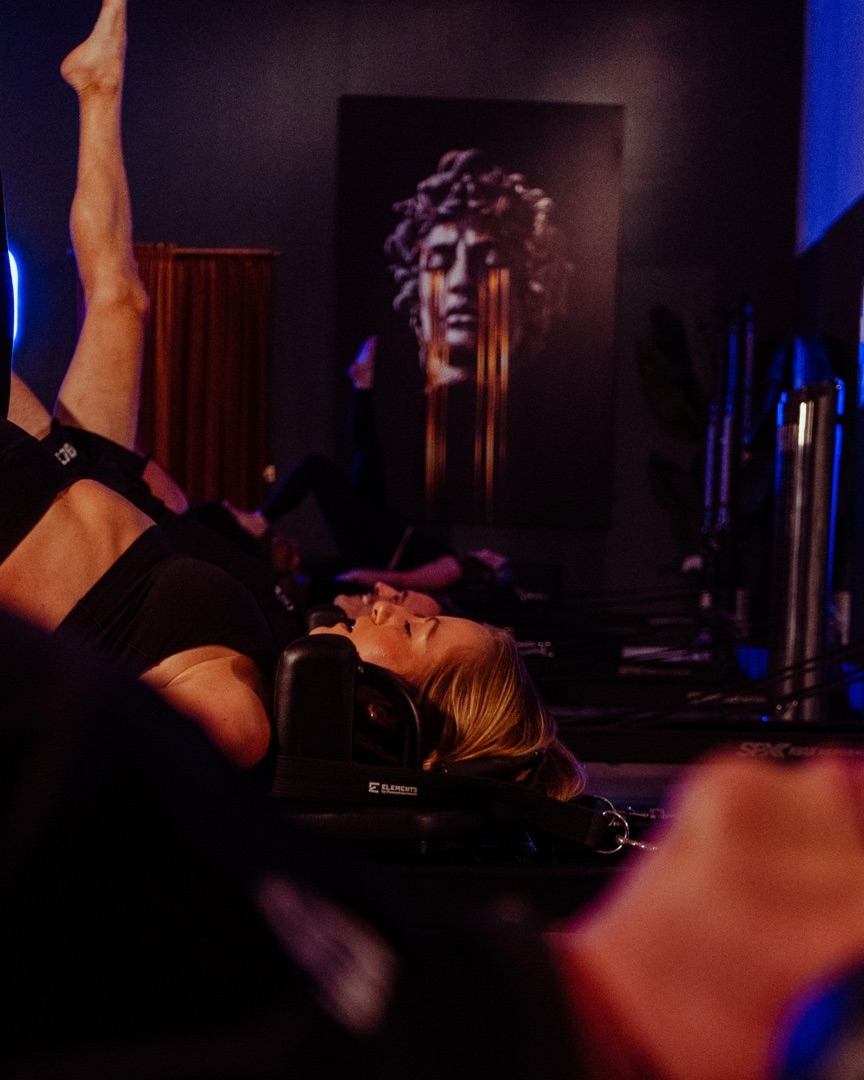
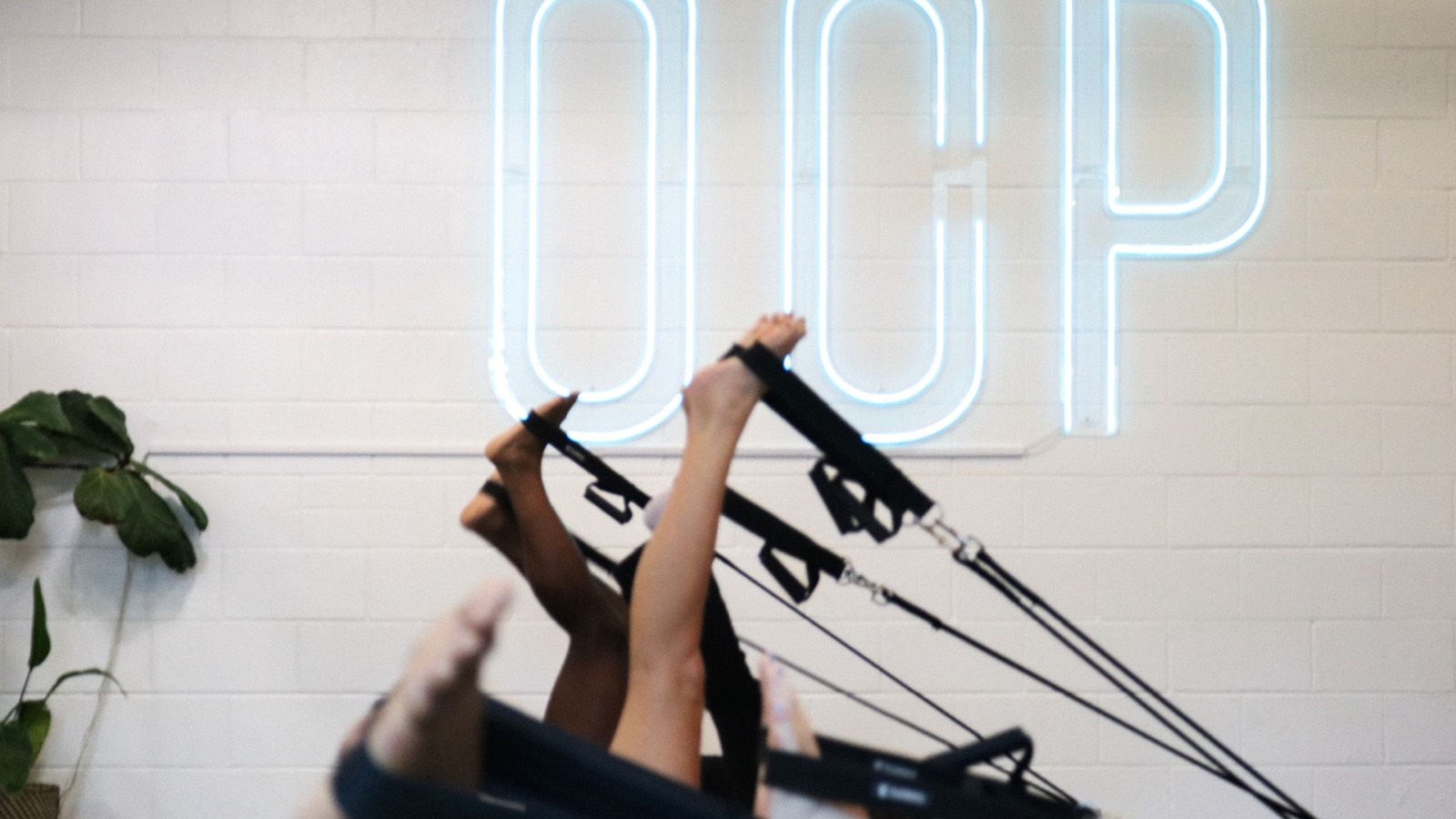
The reformer isn’t just equipment — it’s a system of springs, straps, and a sliding carriage that creates variable resistance for your whole body. Joseph Pilates designed it in the early twentieth century to help injured soldiers regain strength and mobility.
Today’s reformers keep that rehabilitative foundation while delivering:
- Variable resistance through adjustable springs
- Support and challenge at the same time
- Hundreds of exercise variations
- Full-body engagement in every movement
- Low-impact, joint-friendly training
Reformer vs. mat
Searching for Pilates classes turns up both. The difference matters.
Mat Pilates uses body weight for resistance, keeps you on the floor, needs real core strength to start, offers fewer modifications, and is genuinely harder for beginners.
Reformer Pilates uses springs that both assist and resist, works lying, sitting and standing, gives you an easier entry point, allows near-infinite modification, and keeps you engaged with more variety.
For a beginner, the reformer is usually the more accessible and more immediately rewarding place to start.
What it actually does
Core strength and stability. Every reformer exercise engages your deep core, building strength from the inside out.
Flexibility. The straps and springs allow assisted stretching that safely increases range of motion. Desk workers feel it first in the hips and shoulders.
Posture. Strengthening the muscles that support your spine improves alignment. People routinely report standing taller and hurting less within a few weeks.
Injury prevention and recovery. Physical therapists recommend the reformer because controlled movement and adjustable resistance let you strengthen weak or injured areas safely.
Full-body tone. Unlike isolated gym work, the reformer trains multiple muscle groups at once.
The mental side is real too: mindful movement and breathing settle the nervous system, the concentration required sharpens focus, sleep tends to improve, and — unlike an anonymous gym — a studio gives you people.
Your first class, start to finish
Before you arrive
Wear form-fitting athletic clothes; loose layers catch on the equipment. Leggings or shorts, a fitted top, a supportive sports bra. Grip socks are required — we sell them at the front desk if you don’t have a pair.
Bring water, a small towel, and a hair tie. Skip a heavy meal in the two hours before class. Arrive fifteen minutes early so someone can walk you through the machine, and tell your instructor about any injuries before you start.
During
The first five to ten minutes cover the reformer itself — footbar, springs, carriage, straps. Don’t try to memorise it; you’ll learn it by using it.
Then a warm-up: footwork, pelvic tilts and bridges, arm circles on light springs. The main block works legs, core, arms, and full-body coordination. The last stretch is a cool-down to keep you from seizing up tomorrow.
After
It’s normal to find muscles you didn’t know you had, to shake a little (the “Pilates shake” is real), and to feel both wrung out and weirdly energised. Soreness usually shows up 24–48 hours later and gets milder as your body adapts.
How to choose a studio
Certified instructors. Look for a comprehensive certification — a 300-hour programme is the benchmark, and it’s the length of our own teacher training. Ask what an instructor actually completed, not just where they trained.
Small classes. Look for a cap around 12. Bigger classes mean less attention, which matters most when you’re new.
Well-maintained equipment. Springs should move smoothly, straps shouldn’t be frayed, the room should be clean.
Beginner-friendly programming. A good studio either runs dedicated beginner classes or clearly marks which classes suit newcomers.
A location you’ll actually drive to. Dallas traffic decides more memberships than willpower does.
A room you want to be in. Visit at a busy hour and see how people treat each other.
Worth asking before you commit: do you run beginner classes, what do your instructors hold, what’s the cancellation policy, can I see the studio first, is there an intro package, how far ahead can I book, what happens if I need to modify for an injury, and does my membership work at your other locations?
What Pilates costs in Dallas
Across Dallas studios, expect roughly $35–45 for a single drop-in, $50–100 for a new-member intro package, $25–36 per class inside a package depending on size, $80–100 a month for four classes, and $180–250 a month for unlimited. Private training generally runs $80–150 a session.
Those are market ranges, not ours — see Oak Cliff Pilates pricing for what we actually charge.
However you shop: start with an intro package before committing, buy larger packages for a better per-class rate, and go unlimited only once you’re genuinely training three or more times a week. Ask about corporate, student, senior, and healthcare discounts too.
Five beginner mistakes
Comparing yourself to the room. The person doing the advanced variation has probably been at it for years. Watch your own progress.
Holding your breath. Breathing is not decoration in Pilates. Follow the instructor’s cues — generally exhale on the effort.
Using momentum instead of control. Slow down. Quality beats quantity every time.
Skipping class because you’re sore. Gentle movement helps. Come in and tell your instructor, and they’ll modify.
Staying quiet about pain. “No pain, no gain” does not apply to joints or anything sharp. Say something in the moment.
A 30-day plan
Week one — foundations. Two beginner classes. Learn the equipment, the basic positions, the breathing. Five minutes of core activation at home daily. Goal: feel comfortable on the machine.
Week two — consistency. Two or three classes. Refine your form, add a little spring. Ten minutes of stretching at home. Goal: a routine, and less soreness.
Week three — confidence. Three classes. Try new exercises, think about full-body integration. Practise the breathing off the reformer. Goal: notice your posture and energy.
Week four — progress. Three or four classes. Challenge yourself with moderate resistance. Fifteen minutes of movement each morning. Goal: feel stronger, looser, and hooked.
Beyond the first month
Months two and three are about consistency — three or four classes a week, different instructors, different class styles, maybe a private session for a specific goal. Months four to six are where intermediate classes stop being intimidating and the strength gains get obvious. Past six months, it stops being a workout you do and starts being how you move.
Your strongest self is waiting
Starting as a beginner can feel intimidating, but every expert was one. The Pilates community in Dallas is welcoming and genuinely glad when new people show up.
The best time to start was yesterday. The second best is today.
Oak Cliff Pilates welcomes beginners at all three Dallas studios, with instructors who will meet you where you are.